
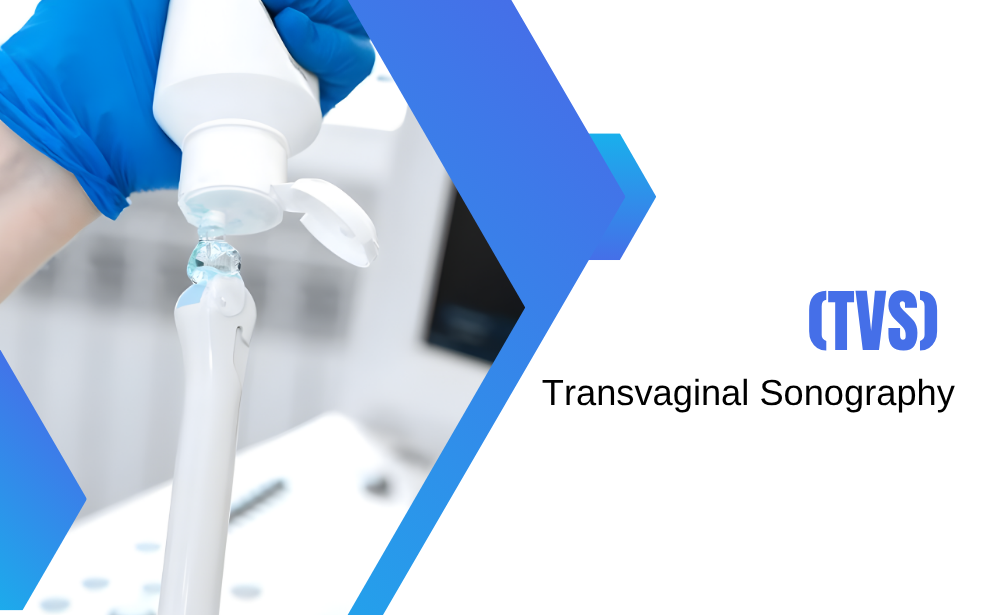
Transvaginal Sonography (TVS)
Transvaginal Sonography (TVS) is a specialized ultrasound technique that provides high-resolution images of the female reproductive organs. Unlike abdominal ultrasound, TVS involves inserting a small probe into the vagina, allowing for a closer and clearer view of the uterus, ovaries, fallopian tubes, and surrounding structures. This makes it an invaluable tool in gynecology and fertility care.
What TVS Helps Evaluate
TVS provides detailed insights into a variety of reproductive health aspects:
- Ovaries and Follicle Development
- TVS allows doctors to monitor the growth and development of ovarian follicles during the menstrual cycle.
- Tracking follicles is essential in ovulation induction, intrauterine insemination (IUI), and in-vitro fertilization (IVF) to determine the optimal time for egg retrieval or insemination.
- Uterus and Endometrial Lining
- Provides a clear view of the uterine shape and size.
- Measures endometrial thickness, which is crucial to assess whether the uterus is ready for embryo implantation.
- Detects subtle abnormalities like polyps or adhesions that may affect fertility.
- Presence of Cysts, Fibroids, or Abnormalities
- Detects ovarian cysts, fibroids, or other structural abnormalities that may interfere with conception or pregnancy.
- Helps in planning appropriate interventions before starting fertility treatment.
- Early Pregnancy Monitoring
- Confirms intrauterine pregnancy and detects early gestational development.
- Assesses the heartbeat, gestational sac, and early signs of complications, providing reassurance to patients.
Role of TVS in Fertility Treatment
TVS is central to modern fertility management, guiding decisions at every step:
- Follicular Monitoring During Ovulation Induction
- Tracks how ovarian follicles respond to stimulation medications.
- Ensures eggs are developing appropriately and helps determine the best timing for ovulation triggering.
- Assessing Uterine Readiness for Embryo Implantation
- Evaluates endometrial thickness and pattern to determine whether the uterus is prepared for embryo transfer in IVF cycles.
- Optimizes implantation chances and improves success rates.
- Guiding Procedures such as Ovum Pickup (Egg Retrieval)
- Provides real-time imaging during egg retrieval procedures, ensuring accuracy and safety.
- Minimizes risk and maximizes the number of eggs successfully retrieved.
Advantages of TVS
Transvaginal Sonography offers numerous benefits for patients undergoing fertility evaluation and treatment:
- Highly Accurate and Detailed Imaging
- Provides a much clearer and more detailed view of the reproductive organs compared to abdominal ultrasound.
- Safe and Painless Procedure
- Non-invasive, generally comfortable, and does not require anesthesia.
- No Radiation Exposure
- Safe for repeated use, even during early pregnancy monitoring.
- Quick and Convenient
- Typically takes only 10–15 minutes, with immediate results to guide treatment decisions.
Why Dr. Abhilasha Mehta Uses TVS
Dr. Abhilasha Mehta employs TVS extensively to monitor every stage of fertility treatment, from diagnosing reproductive issues to tracking follicle growth and ensuring uterine readiness for embryo transfer. By using this technology:
- Treatment progress can be evaluated in real-time.
- Decisions about medication timing, procedures, and interventions can be made quickly and accurately.
- Patients receive personalized care tailored to their individual reproductive needs, maximizing the likelihood of a successful outcome.
In short, TVS is an indispensable tool that provides clarity, safety, and precision, allowing couples to navigate their fertility journey with confidence and care.
